NO ROOM TO PLAY
Client: TBD
Role: Lead Designer
Location: TBD
Program: Temporary Learning Environment
Status: Conceptual
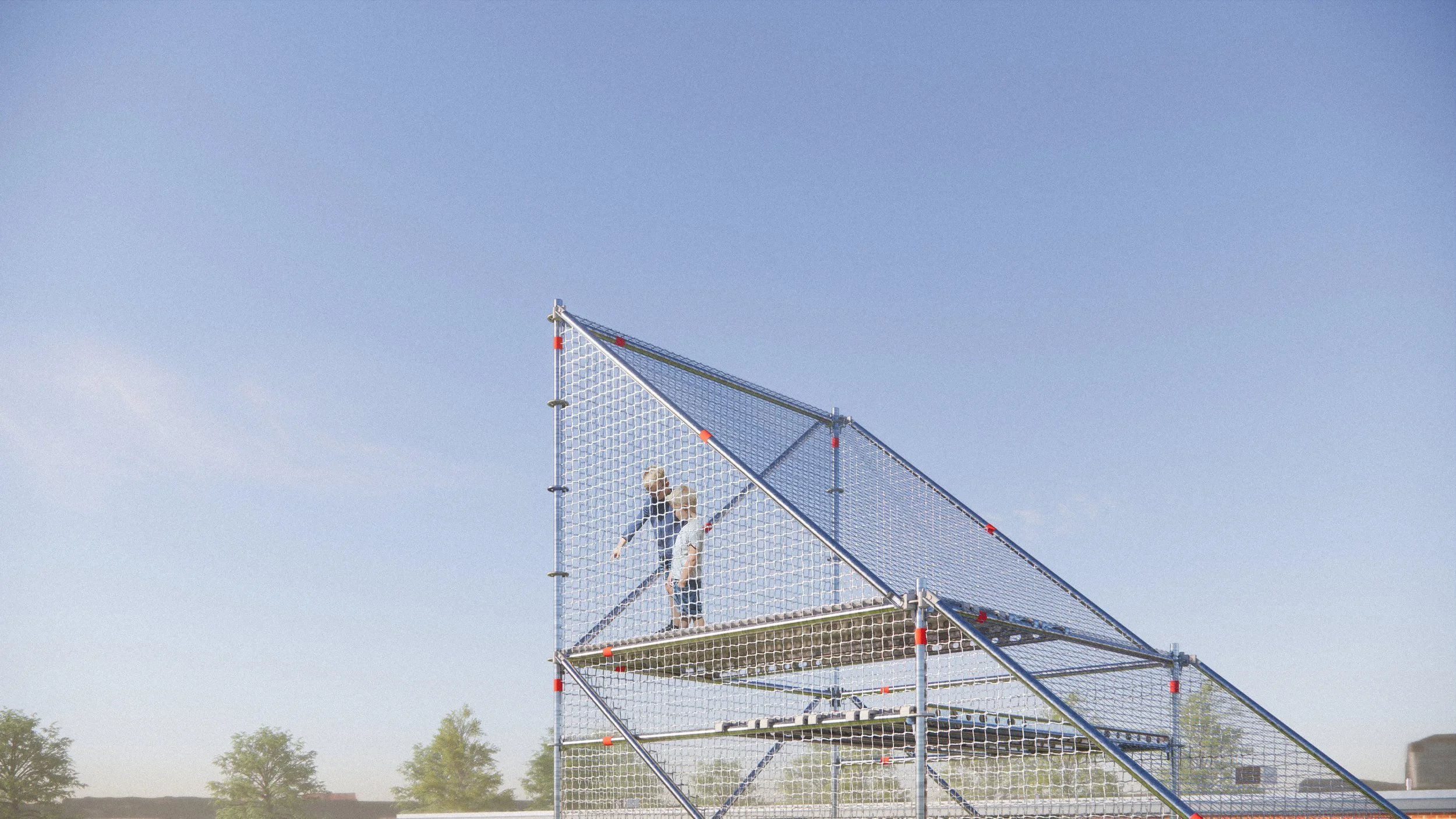
NO ROOM TO PLAY is a temporary outdoor learning environment that operates between installation, landscape, and playscape. Rather than functioning as a conventional classroom, the project frames architecture as a responsive system—one that records everyday behavior through gradual material change.
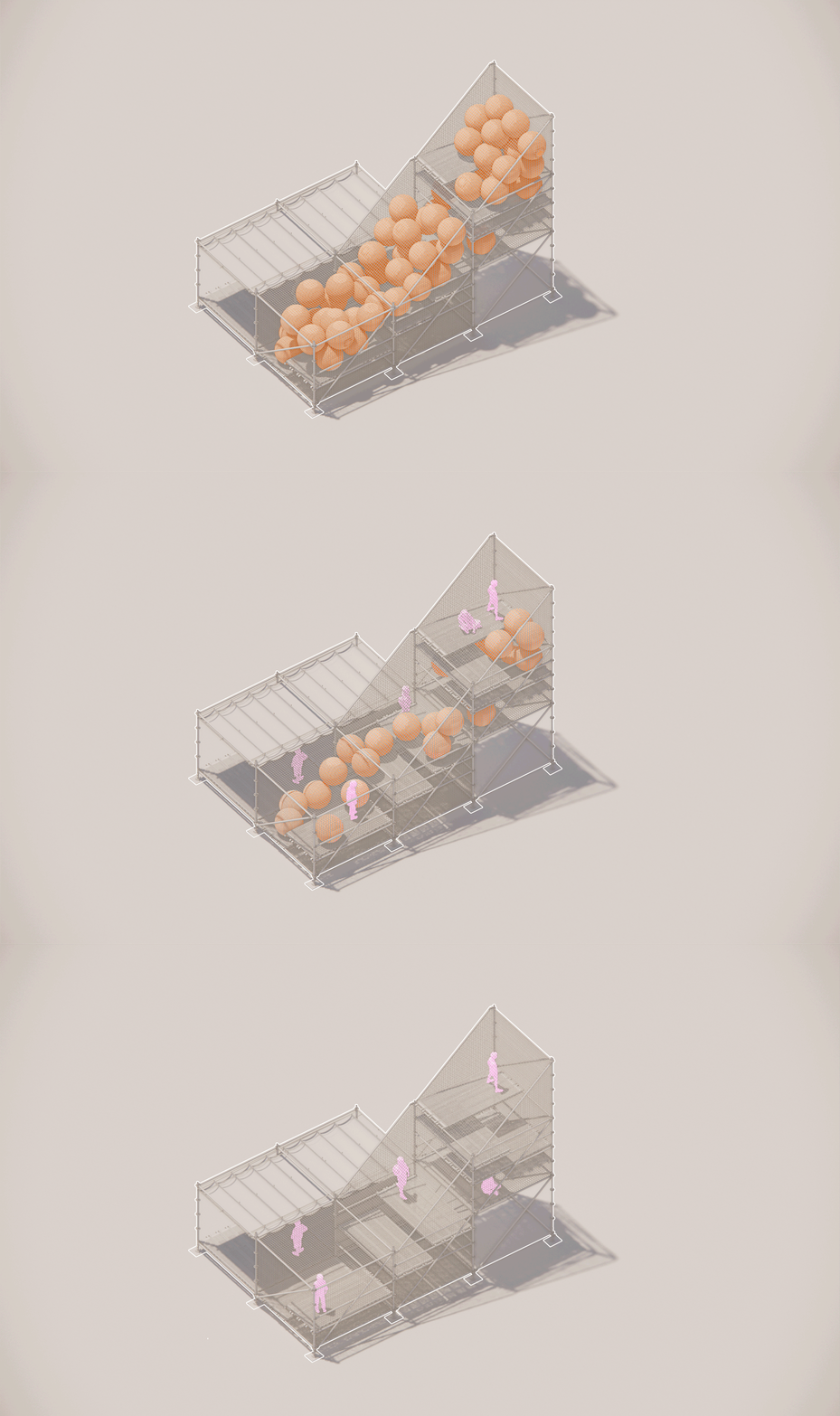
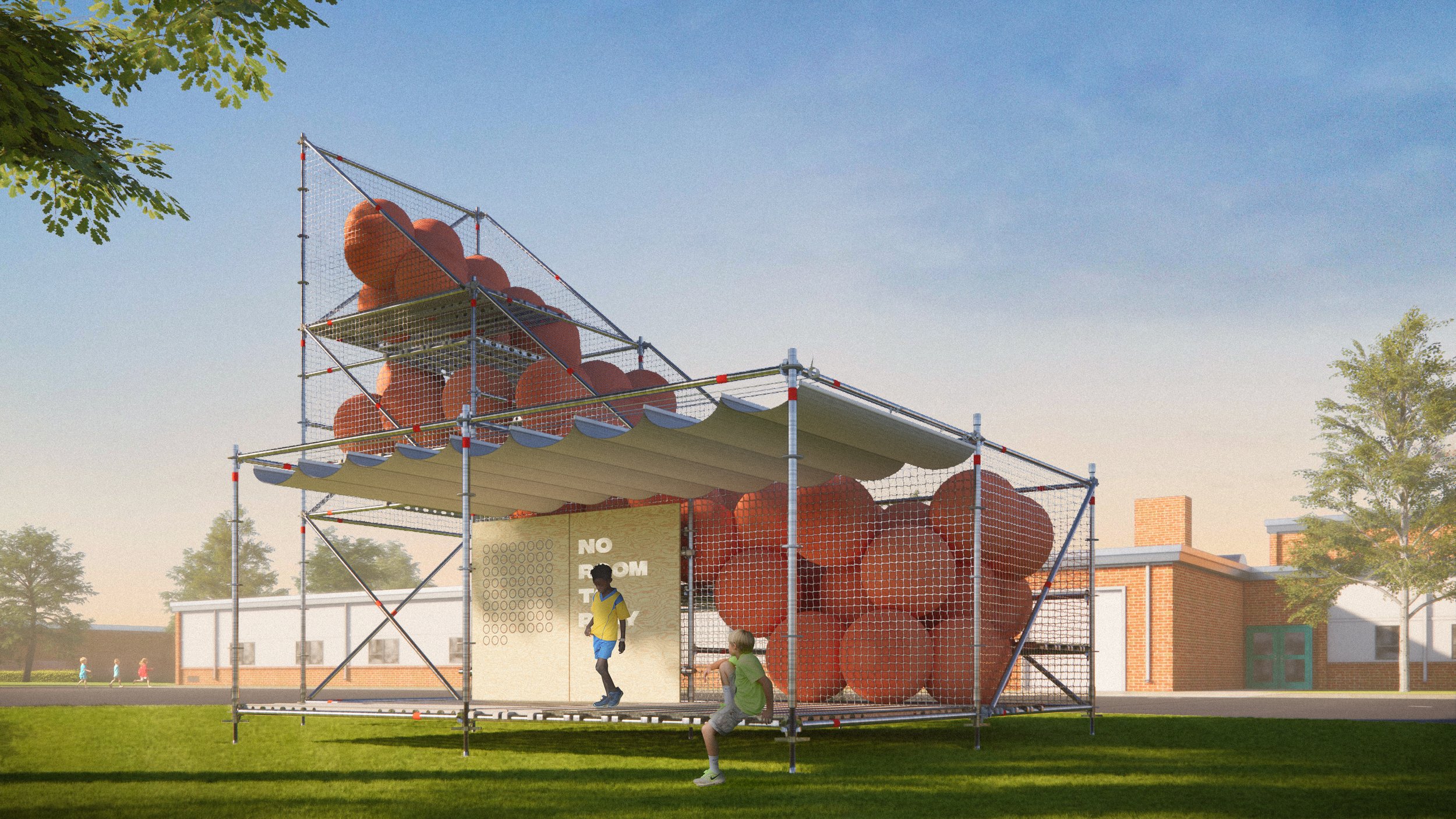
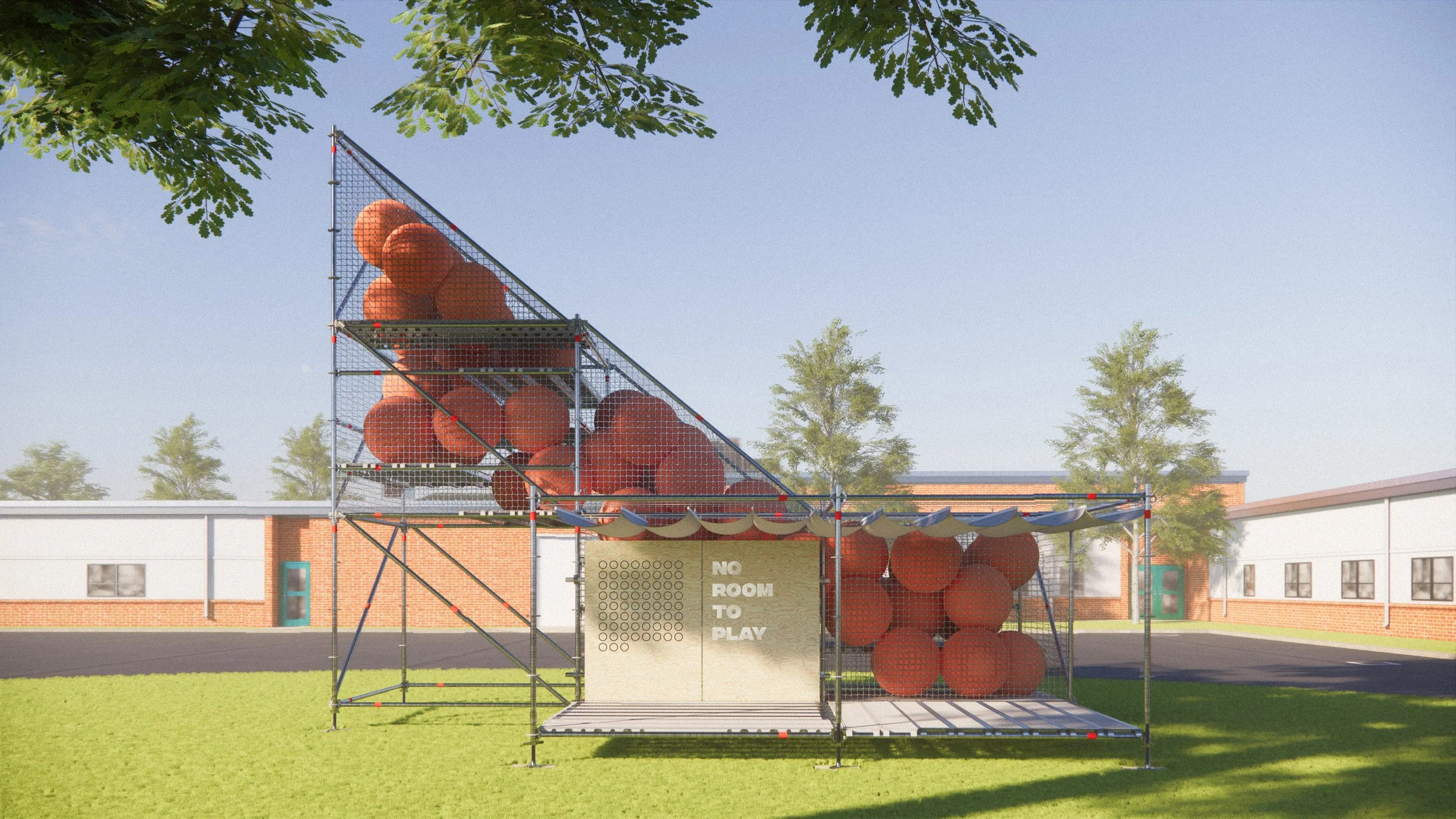
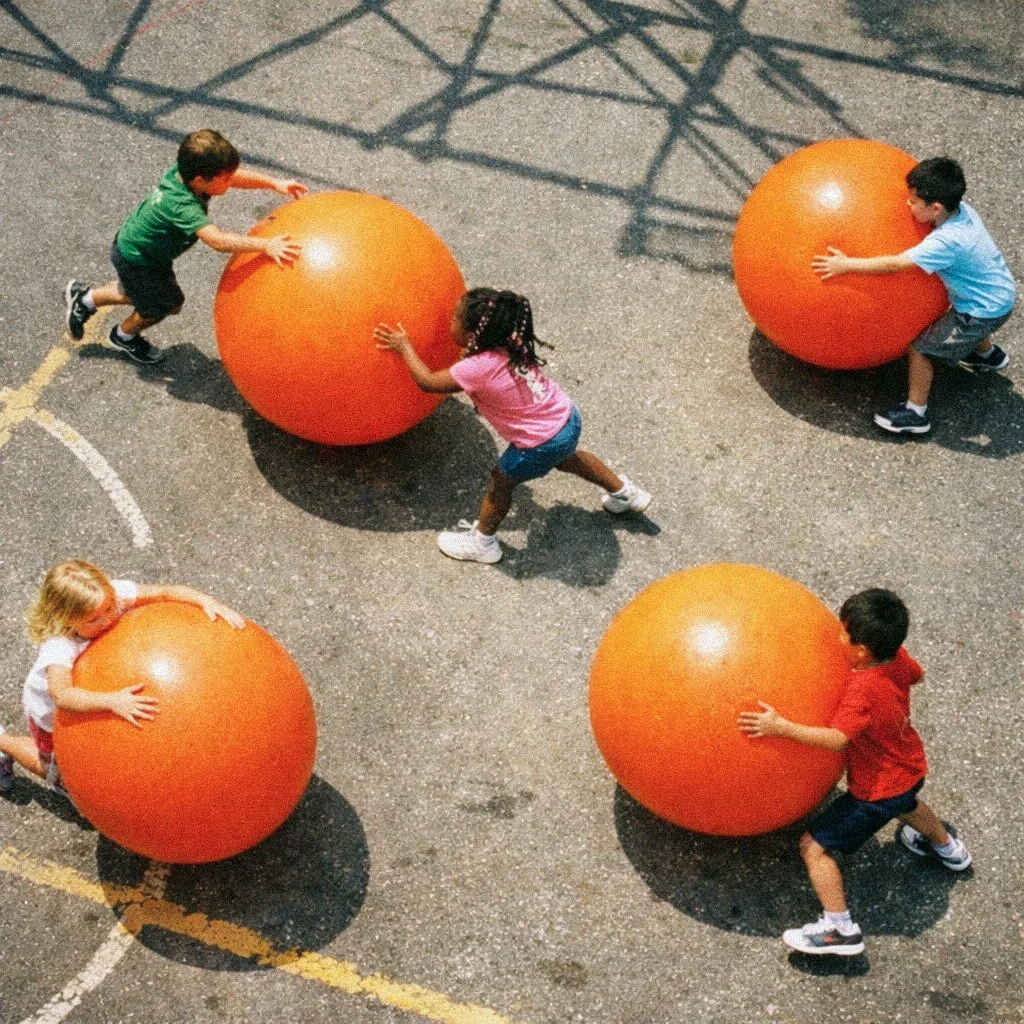
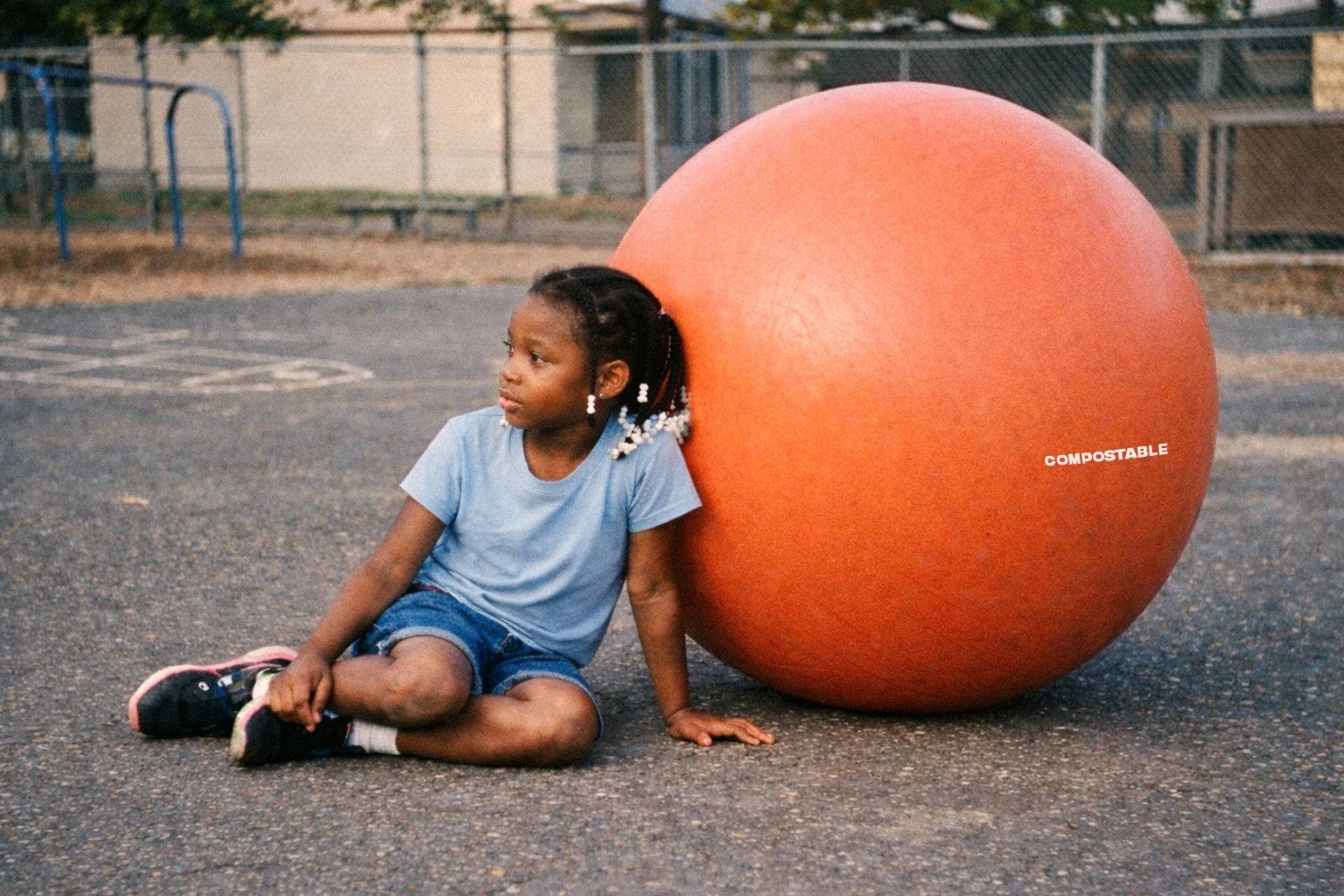
At the beginning of the school year, the structure contains sixty-seven suspended, lightweight spheres. Each sphere weighs one pound and collectively represents the average annual waste footprint of a single student. Constructed from compostable materials and largely composed of air, the spheres create a visible and spatial burden within the environment.
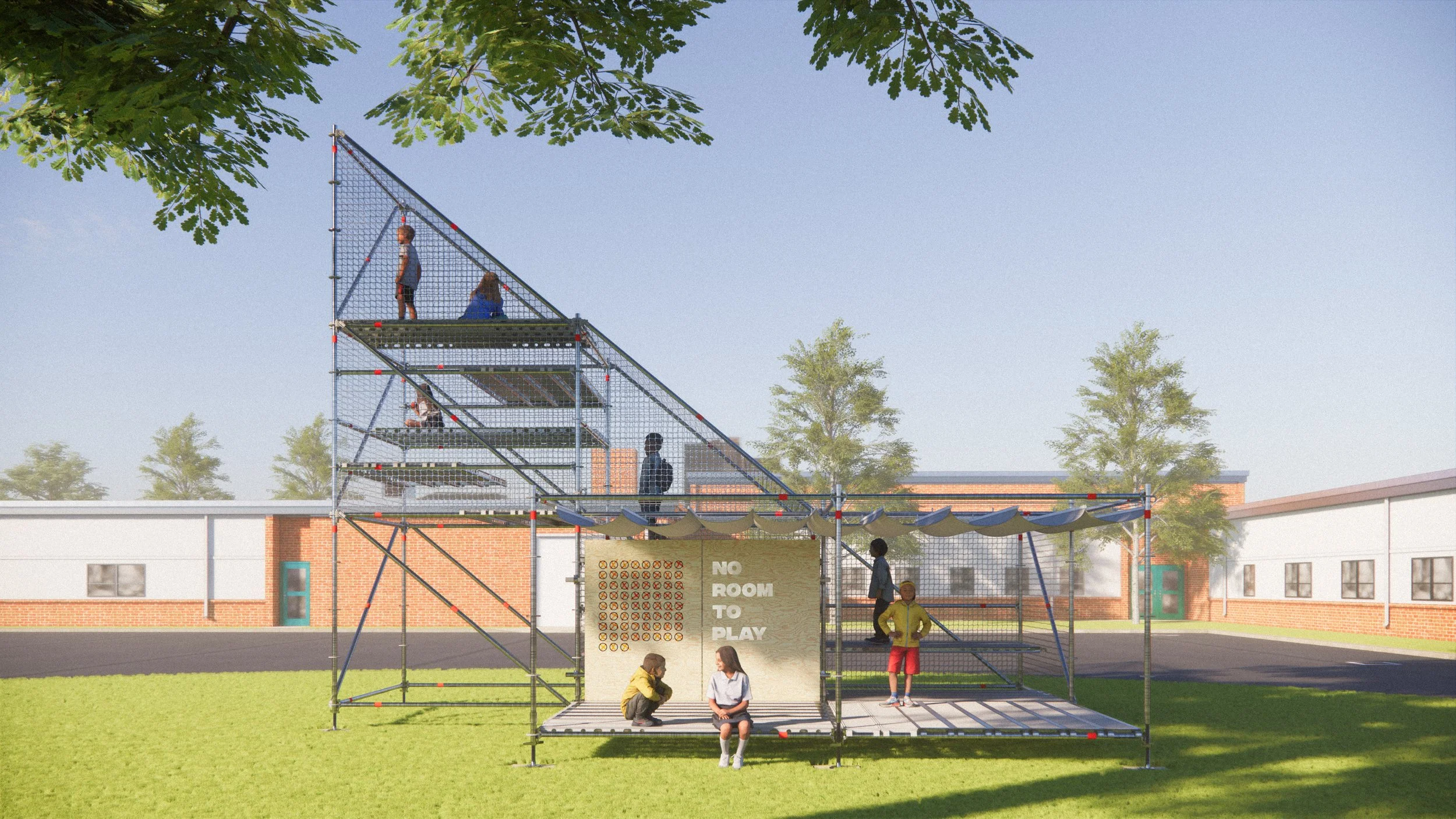
As habits shift through reuse, reduced consumption, and composting, the spheres are removed incrementally. Each object is returned to the ground and incorporated into an adjacent garden. Over time, the structure becomes lighter and more open, increasingly defined by absence, light, and void.
The project does not prescribe a fixed program. It supports reading, gathering, observation, and play, allowing use to emerge through occupation. Learning occurs not through instruction, but through direct engagement with cause and effect. The environment itself becomes a record of change, where space is reclaimed through sustained, collective action.